
Urban dog group classes
For the dog mom who's already done the work, and is ready to show it off.

You didn't come this far to leave your dog at home.
You spent weeks training your dog.
You put in the reps.
You learned how your dog thinks, how they feel, what they need. And it paid off.
Now you want to live it.
You want coffee in one hand and a leash in the other…and not a single thing to worry about.
You want to stroll through the farmers market on a Saturday morning and hear strangers say "oh my gosh, your dog is so well-behaved."
You want to sit on a patio with your friends while your dog tucks in quietly under the table like they've been doing it their whole life.
You want to walk into a dog-friendly store and have people stop you just to say hi to them.
And maybe — maybe — you want to give back.
To bring your dog into a nursing home and watch a resident's whole face change.
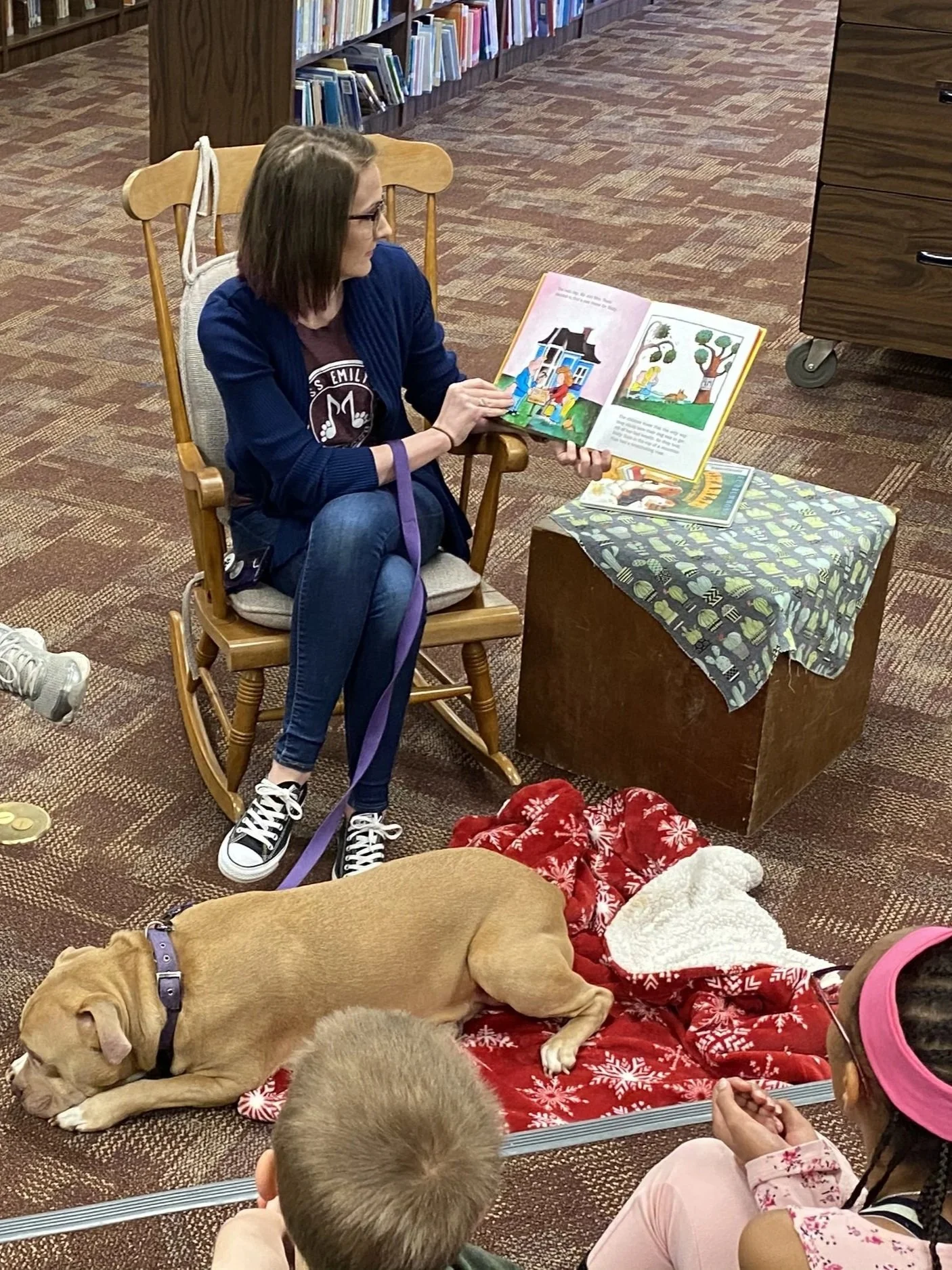
To sit with a child who's struggling to read and let your dog be the reason they keep trying.
That's what Urban Dog is for.
What Urban Dog actually looks like
This isn't a parking lot with cones.
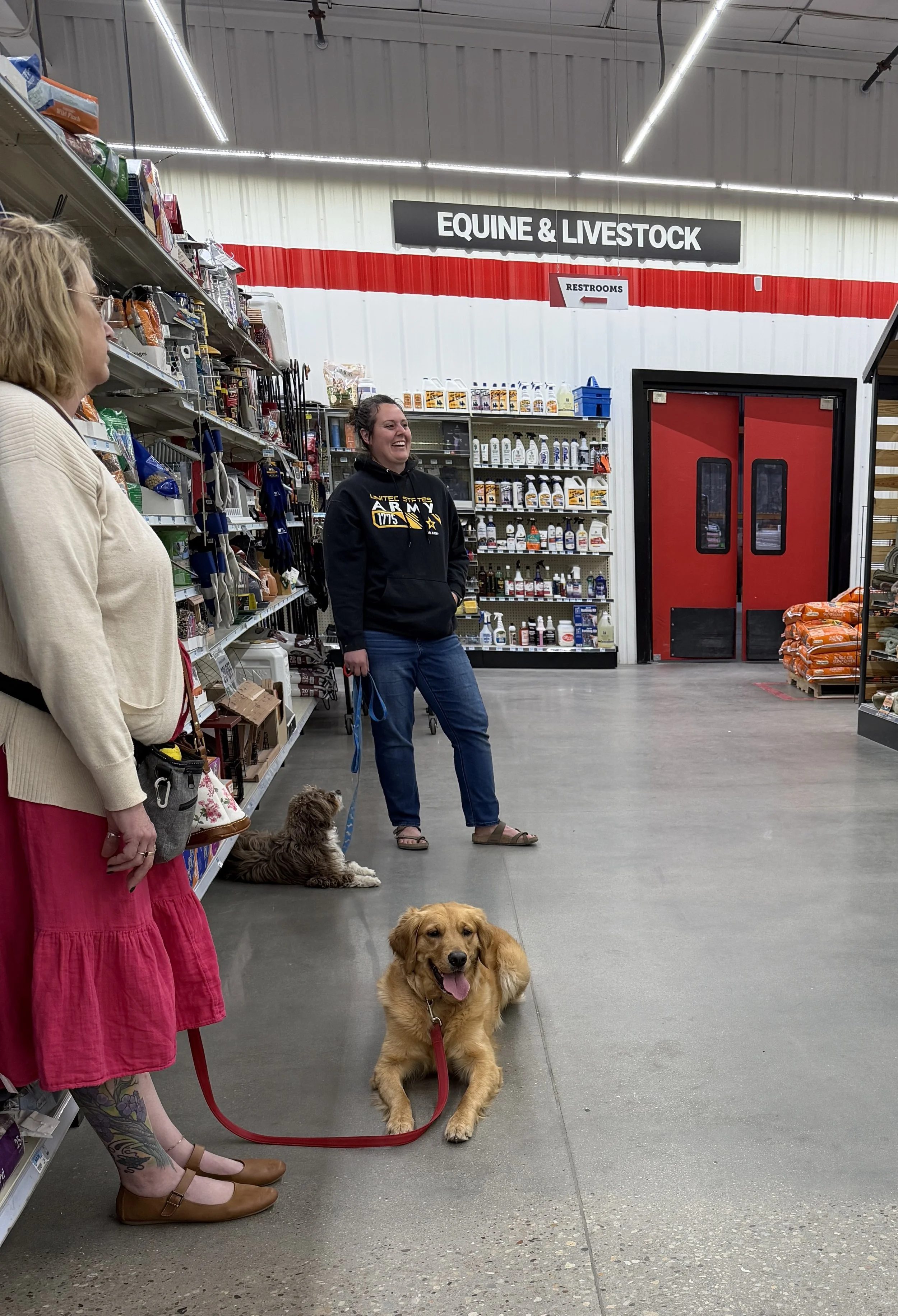
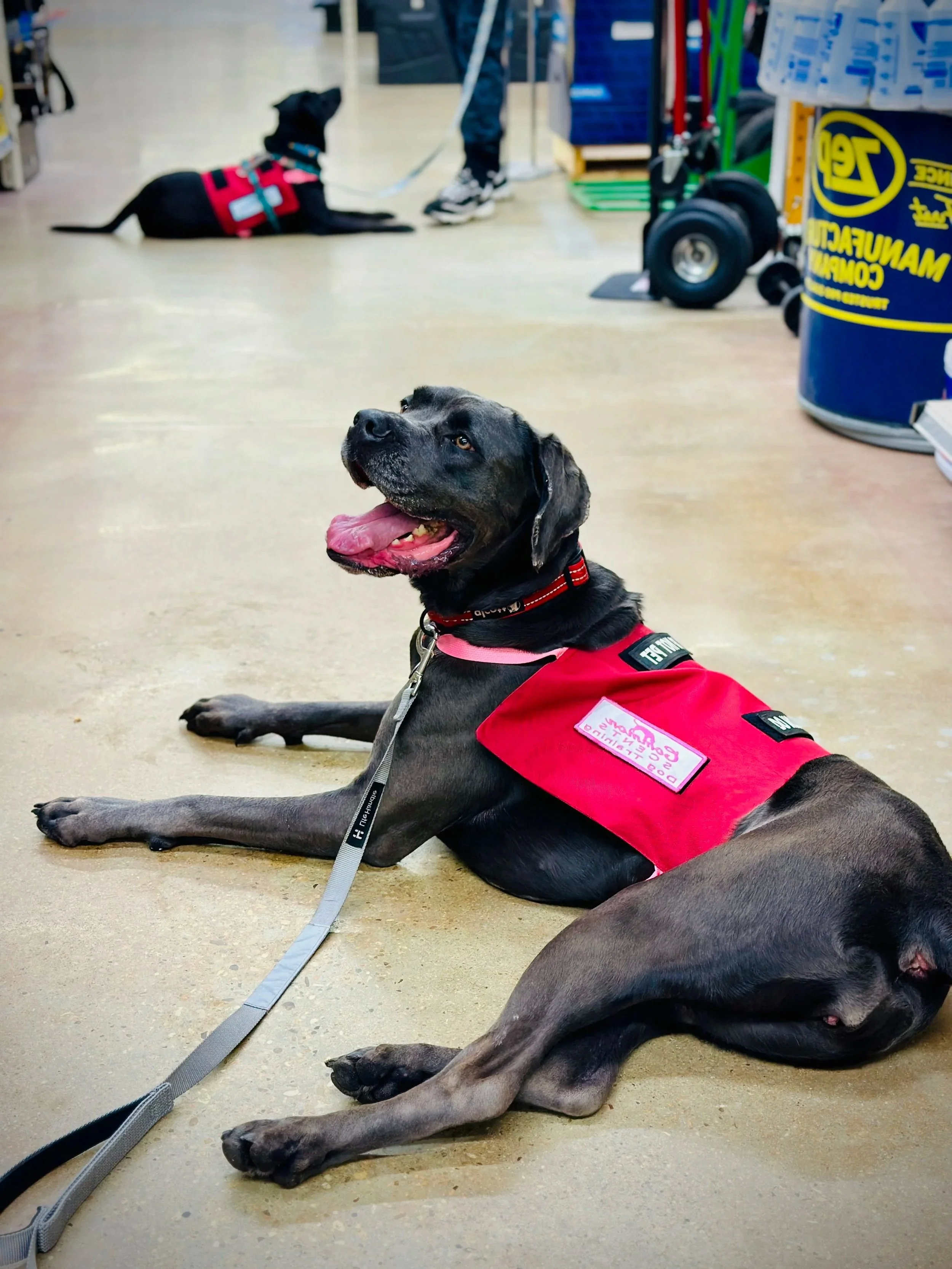
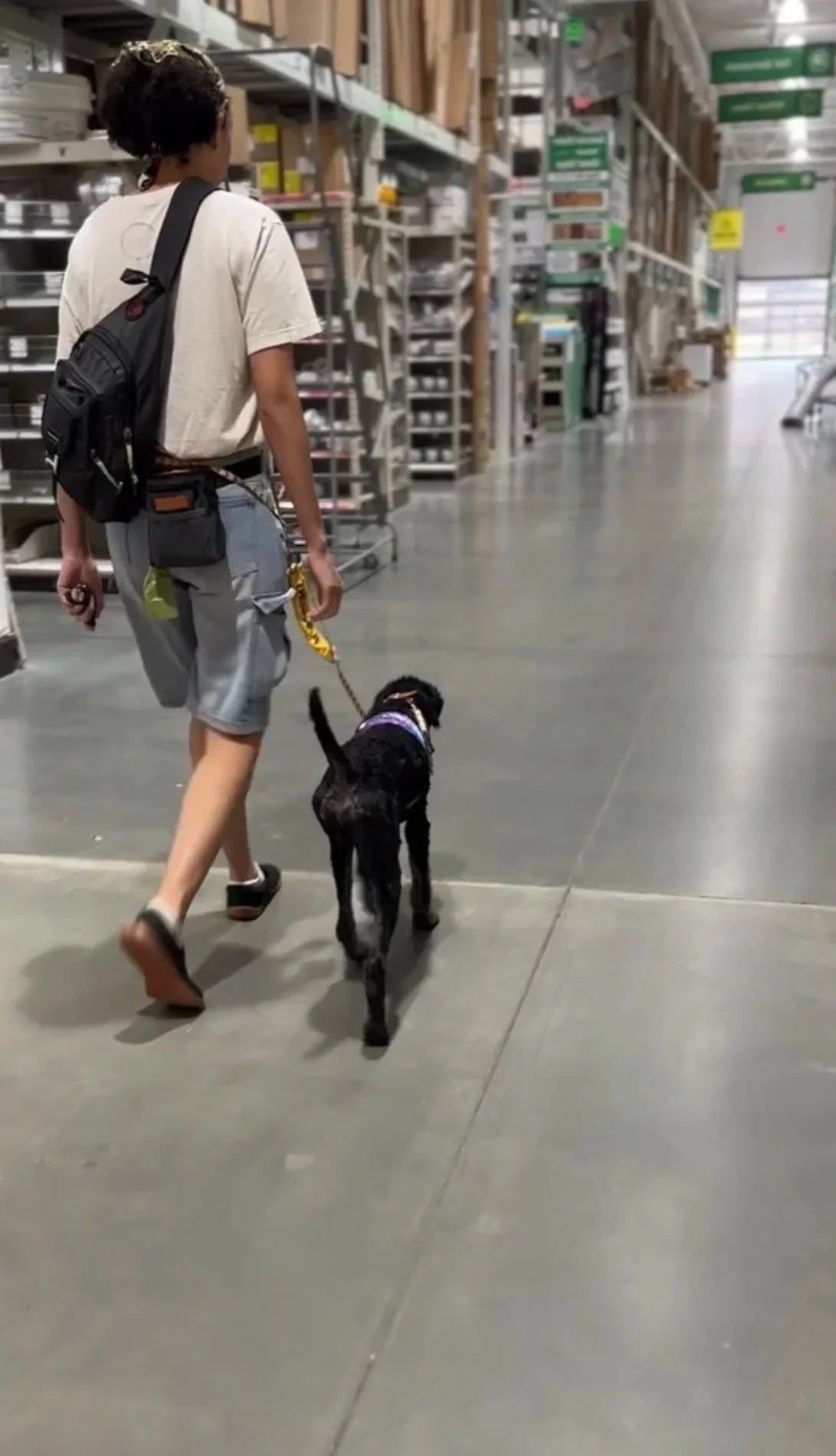
We meet in the real world.
Dog-friendly stores, patios, farmers markets, and businesses where life actually happens.
Six weeks, once a week, one hour each session.
Because "well-behaved in class" isn't the goal.
Well-behaved everywhere is.
Prerequisites: Graduates of our Life Skills class, or dogs with a Canine Good Citizen certification. This program is not designed for beginners or highly reactive dogs.

how the program works:
6-week group class
Weekly homework assignments
Supportive, judgment-free environment
After graduation, you can continue your journey through:
Adventure Dog Program
Therapy Dog Certification
Or both!
Must be up-to-date on age-appropriate vaccines
Location: This class changes locations weekly in a rotation of dog-friendly stores and events.
What’s Inside our
urban dog training classes?
What you'll actually learn in Urban Dog
This isn't a list of tricks. It's a toolkit for real life.
The situations that actually come up when you take your dog out into the world.
How to handle when people want to pet your dog.
Strangers will ask. Kids will just do it. You'll learn how to read that moment, how to set your dog up for success, and how to navigate it gracefully whether your dog is thrilled or just tolerating it.
How to handle when your dog isn't comfortable.
Because advocating for your dog is part of being a good handler. You'll learn to recognize the early signs that your dog is hitting their limit and what to do about it before it becomes a problem. No one gets to pet your dog just because they want to.
How to handle the unexpected like a dog rushing up, a kid bolting toward you, a skateboard out of nowhere.
This is the real stuff. We'll work through distractions, sudden movements, loud noises, other dogs, crowded sidewalks, and the general chaos of being out in public. So that when it happens in real life, you both know what to do.
Loose leash walking in the real world.
Not in a training ring. On actual sidewalks, through actual crowds, at actual events. The goal: leash in one hand, coffee in the other, and not a care in the world.
Waiting calmly while you do human things.
Filling out paperwork. Stopping to chat. Sitting down for a snack. Your dog learns to hang out quietly while life happens around them.
Navigating doors, tight spaces, and busy entrances.
In and out of dog-friendly businesses without pulling, darting, or turning the doorway into a circus.
Walking past other dogs without losing their mind.
Loose leash past a dog on the sidewalk, in a crowd, on a trail. This is the one people think is impossible. It's not.
Sitting calmly in a group.
Your dog holds their position while you have a real conversation with other humans. Radical, we know.
Leave it…in the wild…without being commanded to do so.
A dropped hot dog at the farmers market shouldn't derail your whole morning.
Distance stays and coming when called with distractions present.
Because reliability isn't about what your dog does in a quiet room. It's about what they do when everything is happening at once.
All of these skills directly prepare your dog for the AKC Community Canine (CGCA) and AKC Urban CGC (CGCU) certifications. Both of which can be tested at the end of our 6 weeks together.

What you get:
6 Weekly Group classes
Six one-hour sessions held in real dog-friendly places. Stores, patios, farmers markets, and busy sidewalks. Not a parking lot. Not a training ring. The real world, on purpose, so your dog is ready for it.
up to two akc certifications
At the end of 6 weeks, your dog has the option to test for AKC Community Canine (CGCA) and AKC Urban CGC (CGCU). These are two official titles that say exactly what kind of dog you've built together.
Membership
to Canine revolution
Get access to exclusive training videos, bonus content, accountability, and live support to keep the momentum going between classes so you always know what to work on and how to do it.
Real Results from Real Dog Owners
“I highly recommend Common Scents Training. We approached Emily due to our dog’s reactive issues. Emily’s approach is straightforward and non-judgmental. Her training instructions were easy to understand and put into practice. She has a deep understanding of dog behavior and has helped us understand our dog better. Walks are getting easier and our dog’s confidence has grown. I only wish we had approached her sooner.”
Rebekah M.
“I’ve done some group classes with Emily and it’s been pretty life changing for us. Emily makes training fun and something to look forward to so I’m super happy to have this group as a resource!”
Takara H.

“We have the best trainer in Emily with Common Scents Dog Training. She is so gentle and at ease with Duke. It helps Duke and Mommy.”
Robbie L.


only $200
✔️ 6 weekly group classes
✔️ Access to the trainer in between sessions for help
✔️ Membership to Canine Revolution
✔️ Graduation Certificate and Ribbon

Give your dog the right start - right now.
For just $200, you’ll get six weeks of small-group classes led by a certified trainer, hands on coaching, and socialization done the right way - calm, structured, and safe!
Frequently asked questions
-
Common Scents Dog Trainers are Science-Based Dog trainers. Science-based trainers teach through effectively communicating with the dog in ways they comprehend. A variety of methods are used, including positive reinforcement, shaping, teaching by example, and more.
I do not use any techniques that are considered abuse and believe in LIMA (Least Intrusive Minimally Aversive).
-
I do recommend clicker training your dog because it is 50% faster than other methods. You’re busy! You need all the free time you can get.
If you’re not a fan of the clicker, that’s ok! You can still be successful with your dog. (I hated clickers when I first started training my dogs!)
-
The word “positive” in the term “Positive Reinforcement” does not mean EMOTION.
It means ADDITION.
You are adding something to the situation to get a desired behavior to continue.
To ONLY use Positive Reinforcement means that you as a dog parent, has NEVER yelled at your dog.
That you NEVER say “no”.
That you NEVER turn around and walk away when your dog jumps on you.
All of those things are PUNISHMENTS.
Science tells us that dogs learn by reinforcement and punishments. It also tells us that dogs (and people) learn best with positive reinforcement. So that is where we start, and we adjust as-needed based on the dog’s needs.
-
If your puppy is a little “barky” when meeting new people or dogs, it’s probably because they’re in a Fear Stage.
If you don’t know what a Fear Stage is, you DEFINITELY needs to be in our group classes so we can help you through them.
If your dog is too stressed or fearful during the class, we will ask you to take them home so that we don’t traumatize them for life. We will convert your classes into virtual classes or private sessions instead. -
Yup! And I’m a stickler about it.
Prior to the first day of class, I will need a photo of their vaccination records. If they’ve had the live Bordatella vaccine (nasal or oral), it will need to have been more than 9 days prior to the start of class.